 Skip to content
 DE
DE España
 Italia
 Francia





Product Description
Victoria cast iron skillets are the perfect combination of tradition and functionality. They are designed to last a lifetime and become an indispensable kitchen tool to achieve exceptional results in every recipe thanks to their unmatched ability to distribute and retain heat. They are an essential choice for any cooking enthusiast.
Um Gusseisenutensilien einzubrennen, musst du eine Schicht Öl oder Fett auftragen und sie vorzugsweise 15 Minuten lang im Backofen oder auf dem Herd erhitzen, bis ein leichter Rauch entsteht. Dadurch wird das Eisen geschützt, es rostet nicht und behält seinen guten Zustand bei. Es ist wichtig, den Boden nicht mit starkem Druck zu scheuern, um diese Ölschicht (Patina) nicht zu entfernen.
Beim Waschen
Zum Reinigen deiner Gusseisenutensilien gibt es mehrere korrekte und effektive Methoden, um ihren guten Zustand zu gewährleisten. Du kannst milde Seifen verwenden, um überschüssige Lebensmittel von der Oberfläche zu entfernen, und bei Bedarf einen Stahlwollschwamm benutzen; alternativ kannst du auch mit etwas grobem Salz scheuern, um die notwendige Reibung für die Reinigung zu erzeugen. Nach dem Waschen ist es wichtig, die gesamte Oberfläche deines Utensils sorgfältig mit einem trockenen Tuch zu trocknen und anschließend eine Schicht Öl oder Fett aufzutragen.
Es ist wichtig, dass du berücksichtigst, dass eingebranntes Gusseisen nicht für die Reinigung in der Spülmaschine geeignet ist, während emailliertes Gusseisen vollständig spülmaschinengeeignet ist; jedoch wird dadurch die Patina, die sich beim Kochen durch Öle und Fette bildet und eine stärkere natürliche und gesunde Antihaftwirkung für jede Zubereitung ermöglicht, erheblich entfernt.
Dimensions: 20 cm
Weight: 3.5Kg
High-quality materials: Emailliertes Gusseisen
100% made in Colombia.
Better together
What makes us unique

Ergonomic design

Circular economy

Healthier

Versatile heat sources

Natural non-stick properties

100% recycled iron
Vorteile von Gusseisen
- Geeignet für verschiedene Wärmequellen wie Backöfen, Lagerfeuer, Induktions-, Glaskeramik-, Gas- und Elektroherde.
- Hält über Generationen hinweg.
- Speichert die Wärme und verteilt sie gleichmäßig, was ein perfektes Garen von Fleisch garantiert.
- Die natürliche Antihaftbeschichtung entsteht durch das Einbrennen und die richtige Pflege. Bei Einhaltung beider Prozesse verbessern sich die Antihaft-Eigenschaften schrittweise.

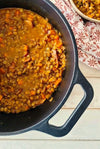
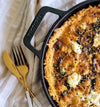
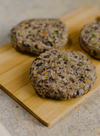
Cast iron recipes





FREQUENTLY ASKED QUESTIONS
We tested more than a dozen different oils and fats to get the best performance right from the start. Flaxseed oil, when used correctly, has always proven to be the best oil for base coats. This is due to several factors:
1. Polymerization: Flaxseed oil is a drying oil, which means it polymerizes more easily than non-drying oils, such as grapeseed oil, another popular oil for seasoning. This property allows it to form a durable, resistant, and non-stick seasoning layer on cast iron.
2. Smoke point: Flaxseed oil has a lower smoke point (around 225°F or 107°C). While this can be a disadvantage for cooking, it is actually beneficial for the seasoning process. The lower smoke point allows the oil to polymerize at lower temperatures, creating a strong bond with the cast iron surface.
3. Fatty acid composition: Flaxseed oil is high in alpha-linolenic acid (ALA), an omega-3 fatty acid, which is relatively stable compared to the polyunsaturated fats found in grapeseed oil and other popular seasoning oils. This stability can result in a longer-lasting, more resilient seasoning on your cast iron cookware.
4. Food safety: Flaxseed oil, when properly polymerized, forms a stable and safe surface for cooking. The polymerized layer reduces the risk of oxidation and the formation of harmful free radicals during cooking, ensuring a healthier culinary experience.
Our cast iron comes high-temperature seasoned and ready to cook. Here are our recommendations:
- Hand wash and dry completely before the first use.
- It is normal for food to stick to the surface of cast iron cookware during the first few uses. To prevent this, we recommend using a small amount of cooking oil or fat until the seasoning strengthens and settles. You can use any edible fat, such as vegetable oil, nut oil, lard, or butter.
- When cooking with cast iron, it is important to use the proper temperature to prevent food from sticking. Cast iron retains heat very well, so we recommend using low or medium-low heat for most foods. Delicate foods, such as proteins, cook best on low heat.
- To protect the seasoning, we also recommend avoiding acidic foods like tomatoes, vinegar, and citrus until the seasoning has had time to develop.
- If you want to give your cast iron cookware an extra layer of seasoning, some people choose to season it one or more times before use. This is not necessary if you take good care of the cookware, but it can help create a thicker seasoning layer in less time. Ultimately, the decision is yours.
Although it can be exciting to start using your new cookware, it is important to avoid common mistakes that can damage the seasoning and cause problems when cooking. To prevent these errors, we recommend:
- If you make a mistake and rust appears or food sticks to the pan, don't worry: cast iron is durable and can be restored with proper care and maintenance. To learn more about how to re-season your cookware, check the instructions included in the packaging or on this website.
- Remember that, as long as your cast iron cookware is not broken, it can always be recovered and returned to its original state.
- With proper care and attention, your cast iron cookware will provide you with many decades of reliable use.
We are working on it and will launch it soon. In the meantime, tell us what you prefer: glass or iron?